
Filter by:
Applying AI in ways enterprises can govern and operate
Applied AI
How we apply AI at enterprise scale.
Enterprise Data & AI
Trusted, permissioned data for production AI.
Security & Responsible AI
Controls and auditability that scale with AI.
GenAI & Agentic AI
Autonomy with guardrails and oversight.
AI Operating Model
Ownership, lifecycle, and change control for AI.
Enterprise situations we take responsibility for
AI Adoption
to Production
to Production
Move AI from pilots to dependable production.
AI-led Enterprise &
Cloud Modernisation
Cloud Modernisation
Modernise platforms while keeping control and stability.
Agentic Workflow
Automation with Guardrails
Automation with Guardrails
Automate workflows with clear boundaries and oversight.
AI-ready Data
Foundations & unification
Foundations & unification
Make enterprise data usable for AI at scale.
Security Modernisation &
Secure AI
Secure AI
Modernise security so AI can scale safely.
Intelligent Operations
(AIOps / Platform Ops)
(AIOps / Platform Ops)
Run complex platforms reliably as change accelerates.
Cloud Financial Governance
(MirAI FinOps)
(MirAI FinOps)
Make cloud economics predictable as AI usage grows.
Edge AI &
Industry Systems
Industry Systems
Apply AI where latency and physical reality matter.
Technology foundations for building, governing, and operating at scale
AI platforms
Platforms for deploying, governing, and operating AI in production.
Generative AI platforms
Agentic AI frameworks
ML platforms
Model governance & MLOps
Agentic AI frameworks
ML platforms
Model governance & MLOps
Data Platforms
Platforms for trusted, governed data access at enterprise scale.
Enterprise data foundations
Enterprise data unification
Analytics platform
Enterprise data unification
Analytics platform
Security Platforms
Identity and security layers that enforce control across systems.
Identity & access
Data & AI security
Application & Agent security
Data & AI security
Application & Agent security
Infrastructure Platforms
Cloud, data centre, and edge foundations for reliable workloads
Cloud
Datacentre
Edge
Datacentre
Edge
How we engage, deliver, and operate in enterprise environments
Experience-led insights, reference material, and factual updates
Insights
Perspectives
Judgement shaped by real enterprise situations.
Enterprise White Papers
Deeper analysis of architecture and operating models.
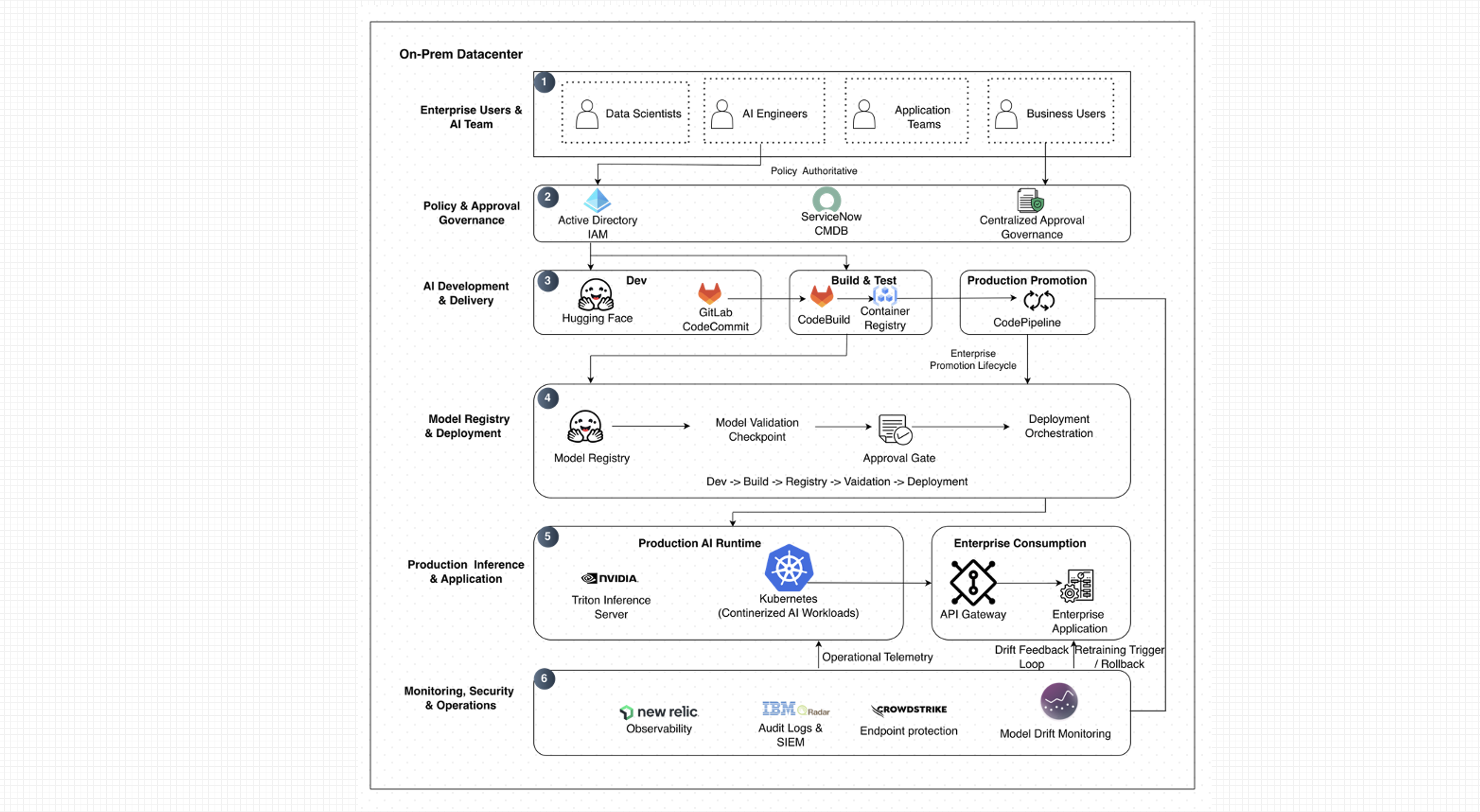
Reference Architectures
Production-grade patterns used in live environments.
Conversations
Peer dialogue on enterprise challenges and decisions.
.png)
.png)
.png)
.png)
.png)
.png)
.png)
